Showing posts with label Featured Article. Show all posts

Thursday, July 30, 2009

New Museum Website and Media!


The Rosicrucian Egyptian Museum
has a new web home!


We are delighted to announce that the Museum has a new Website:


http://www.rosicrucianegyptianmuseum.org/


Please visit us to enjoy this beautiful new site and features!

Also, please visit and become a Fan of the our Facebook pages:

Rosicrucian Park: http://bit.ly/tO9dr

Official AMORC Site: http://bit.ly/74clt

Or, just Log on (or join) Facebook and then search for "Rosicrucian Egyptian Museum" and "Rosicrucian Park" and "Rosicrucian Order AMORC" for information on new features and news!

You can also follow us on Twitter at


AMORC

Egyptian Museum

RCEgyptMuseumSJ

RCLibrarySJ


Enjoy these new resources!


Saturday, May 23, 2009

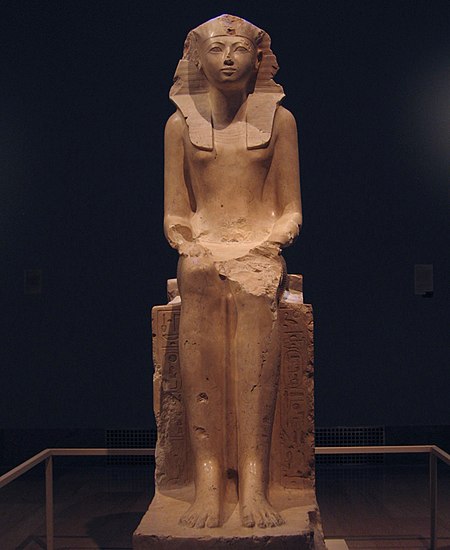
Discovering the Mummy of Hatshepsut

One of Egypt’s most famous pharaohs, Hatshepsut is known for an ambitious building program, legendary trading expeditions, and an exceptionally prosperous reign. Hatshepsut is most famous, however, for being one of the few women to rule Egypt as king. Until recently, the body of this legendary ruler was thought to be lost to history, destroyed, like her monuments, in attempts to wipe out all evidence of her reign. However, recent studies suggest that an anonymous mummy in the Valley of the Kings may indeed be "the king herself."


Hatshepsut lived during Egypt’s Eighteenth Dynasty, whose well-known members included Akhenaten, Nefertiti, and Tutankhamun. Her father was Thutmose I, and she married her half-brother, Thutmose II (a common custom for Egyptian monarchs). When Thutmose II died, his son Thutmose III, whom he fathered by another wife, was too young to rule. Queen Hatshepsut became his co-regent and ruled on his behalf, another common custom.


Hatshepsut broke with tradition, however, when she declared herself king. She ruled for a time on her own, and then later as co-Pharaoh with Thutmose III. She used male titles and portrayed herself with traditional kingly attributes. This probably helped to legitimize her reign, since Egyptian custom held that kings should be male. She also reinforced her right to rule by claiming divine descent, and emphasizing her royal lineage through her grandmother, Ahmose-Nefertari. Thutmose III eventually became king, but there is little evidence to suggest he felt animosity toward his step-mother. The destruction of her monuments most likely represents a later political attempt to erase the memory of a female pharaoh and preserve Egyptian tradition.


Hatshepsut’s official tomb, KV20, contained canopic jars for her internal organs but no mummy. A box inscribed for Hatshepsut was found in the cache of royal mummies at Deir el Bahri, but her mummy was not found there. The box contained viscera, probably r from the mummification process, and a fragment of a tooth. The tomb of Hatshepsut’s wet nurse, Sitre-In, is labeled KV60 and contained two female mummies. One was found in a coffin inscribed for Sitre-In, the other was on the floor without a coffin. Despite the fact that her left arm was crossed over her chest in the gesture associated with royalty, the latter mummy was ignored while Sitre-In was taken to a museum. After all, there was little to suggest the glory of who this mummy had been in life- the body was of an obese woman around 50 years old, who suffered from severe gum disease and tooth decay, diabetes and advanced bone cancer.


In 1989, fragments from a gilt wooden coffin were found in KV60. This coffin had a notch for the attachment of a false beard of the type worn by pharaohs, which might suggest a pharaoh had once been buried there- but the bodies from the tomb were both women. Recent analysis of the mummy left in the tomb also showed that it was missing a tooth. When researchers compared it to the tooth fragment from the box inscribed for Hatshepsut, it proved to be an exact match. It was becoming evident that this mummy could be that of the legendary queen. The next step in the process is DNA analysis, which is currently being conducted. Preliminary tests have been “encouraging” in suggesting a relationship between this mummy and that of Ahmose-Nefertari, Hatshepsut’s grandmother.

The search for Hatshepsut’s mummy has led to the construction of a new DNA laboratory near the Cairo Museum, the first of its kind dedicated specifically to mummy studies. National Geographic Magazine also made Hatshepsut the cover story for its April issue. With all of this excitement and new possibilities for research, the results of this study will be widely anticipated and may solve one of ancient Egypt’s greatest mysteries.


Image Credits:


1. Wikimedia Commons: Hatshepsut, Eighteenth dynasty of Egypt, c. 1473-1458 B.C. Indurated limestone sculpture at the Metropolitan Museum of Art,New York City. Photo by Postdlf


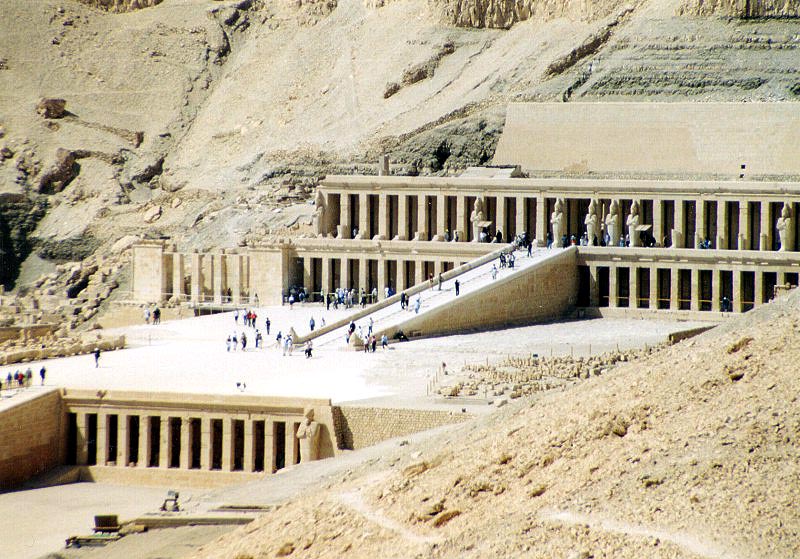
2. Wikimedia Commons: Schreibkraft and Luestling


3. At the Rosicrucian Egyptian Museum, you can see a model of Hatshepsut’s mortuary temple at Deir el Bahri, and this blue cylinder bead inscribed with the queen’s throne name, Maatkare.


Monday, March 30, 2009

A Dream of the Stars: A Brief Look at the Historic Rosicrucian Planetarium (Part 2)

The Rosicrucian Planetarium was the fifth built in the United States, and part of a very long tradition. Planetarium history begins during ancient Egypt and the tomb of Senenmut— the earliest known depiction of the sky. Nearly 2,200 years ago the Greek philosopher Archimedes (287–212 BCE) is credited with creating the first early planetarium device that could predict the movements of the Sun and the Moon as well as the planets. Today these devices are usually referred to as orreries. In fact, many planetariums today have what are called projection orreries (including ours) which project onto the dome the Sun and planets, usually those planets limited to the ones visible with the naked eye (Mercury - Saturn).

The first device that we might refer to as a true “planetarium," that is an enclosed area intended to observe an artificial sky, appears to have been a type of tent with holes punched in it so as to emulate the constellations as they appeared in the sky.

Originally designed and crafted by the Arabs of the 13th century, the device eventually came to Europe as a result of the Crusades. In 1229 the emperor Friedrich II of Hohenstaufen brought one such tent with him from a campaign in the Near East. Although none remain today and the details are limited, it seems that the viewer sat within, while a kind of rotating platform moved the tent around the individual.

The covering was perforated with tiny holes used to represent stars. The sky, the constellations and their motions could now be viewed during daylight hours. Over the next 600 years the same idea led to the making of various domes and globes for viewing the heavens above. The majority featured the same basic idea as the tent previously mentioned only the tent itself was replaced by a stationary domed building.

The first modern planetarium emerged from Germany in the in the early 20th century. In 1903, the German scholar, Oskar von Miller, began planning the German Museum in Munich. This museum was intended to celebrate the accomplishments of modern science and technology. It was also to feature a section dedicated to astronomy. Here the first modern star projector would replace forever the antiquated stationary domes of the 18th and 19th centuries.

The optical star projector as a concept is surprisingly simple. It revolves around the idea of a single globe punctured with holes to emulate the stars and their position in the sky, each hole fitted with a lens to amplify the light. A powerful bulb within the globe would therefore project the sky up on to a dome. Motors would rotate the unit so as to emulate the movement of the heavens. All of this sounds simple yet getting all the components to function together proved troublesome to its inventors.

The company responsible for the star projector's creation was the optical company Carl Zeiss located in Jena, Germany. Its creation however, as mentioned, would not be an easy task. In addition to the mechanical difficulties, the First World War and the economic crises plaguing the world at the time caused the project to be delayed for several years.

Finally in 1923 the German Museum’s planetarium powered by the Zeiss Model I projector opened to worldwide acclaim. This would become the prototype for all modern star projectors and planetariums over the ensuing 60 years.

When the Rosicrucian Planetarium opened in 1936, it included the first ever U.S.-built star machine designed and constructed by H. Spencer Lewis, and a team of engineers and scientists here at Rosicrucian Park. Regularly scheduled “star shows” began.


Today we have a modern Spitz projector powering our shows. Our Spitz system 512 projector is capable of projecting more then 1,300 stars onto the dome. The star machine also features latitudinal, daily, annual and precessional motions for the demonstration of various celestial phenomena. This model is in fact one of the most widely used in the world being installed in over 150 planetariums worldwide.

For over 70 years our Planetarium has faithfully served the community by bringing the wonders of the cosmos alive. Please feel free to join us for our current planetarium show The Mithraic Mysteries. This show plays daily at 2:00 pm with an additional showing at 3:30 pm on Saturdays and Sundays. In addition to our show the planetarium is also home to the Rosicrucian Welcome Center, a fascinating exhibit on the history of Rosicrucian Park.


Thursday, March 12, 2009

The Ides of March

The Ides of March: Cleopatra VII’s Egypt at the Dawn of the Roman Imperial Era

On March 15th, 44 B.C.E. Julius Caesar was assassinated. The Ides of March has long been associated with the beginning of the juggernaut known as the Roman Empire, an empire that would span the Mediterranean and lay the foundations for much of our modern Western society. Yet this history-changing event would also lead to the downfall of Pharaonic Egypt and be seminal in the life of Cleopatra VII (image at left), the last Egyptian Pharaoh and one of the most famous personalities from the ancient world.

Descended from Ptolemy I Soter (Ptolemy “the savior”) who arrived with Alexander the Great’s army about 300 years prior, Cleopatra VII came from a Macedonian Greek lineage that would rule Egypt as monarchs who were sometimes out of touch with their people. Even though great building projects were undertaken during their time consistent with traditional Egyptian themes, the Ptolemies outwardly appeared more focused on their heritage across the Mediterranean. Their statuary was kept consistent with the idealistic yet still fluid representations of Greek Kings and Queens, while their living quarters, palaces, dining tendencies, writing and overall day to day life resembled that of their home country, until Cleopatra VII took the throne.

She was the only one of her dynasty recognized as having learned the ancient Egyptian language, Cleopatra often identified herself with the goddesses Isis and Hathor (Two very similar goddesses representing magic and love/beauty respectively), and held parades and rituals in traditional Egyptian style. Her statues were also portrayed in the age-old Pharaonic manner with the left foot forward, a straight and rigid body posture, the goddess Wadjet adorning her brow, and a stoic countenance.

During the rise of Rome’s military might, Cleopatra formed a political and personal union with the most celebrated and revered general of that country, Julius Caesar. Their alliance kept Cleopatra on the throne and Egypt free of Rome’s ever-expanding armies. The Egyptians were able to go about their lives as they had for millennia past. Unfortunately, Roman sympathies were not with Caesar and his new ally. Egypt, to the egalitarian Republic of Rome, was a land of absolute monarchy where the Pharaoh was a god incarnate and had unqualified say over the populace’s governance, morals and values. Caesar’s dalliance with Cleopatra caused the Romans to fear he would make himself King to her Queen, ruling by her side not only in Egypt but perhaps in Rome as well. These fears culminated on March 15th, 44 B.C.E., where Julius Caesar was mobbed and stabbed by a gang of Senators in Rome, leaving Cleopatra without her Roman connection.

Living in Rome at the time, Cleopatra fled back to Egypt with the angry sentiments of the Roman populace focused upon her. For the next few years she was able to hold Egypt’s sovereign position by forming an alliance with Marc Antony, another powerful Roman general. Ultimately though, Egypt and Cleopatra’s hopes for continued autonomy had died with Caesar. The Romans, fearing that another of their leaders had a taste for ultimate power, backed Caesar's nephew Octavian (later to become the first Roman Emperor, Augustus) in war against the partnership of Marc Antony and Cleopatra. Octavian invaded Egypt, and further expanded Rome into a true Empire.

He was successful, and with the death of both Marc Antony and Cleopatra, Egypt would become a province of Rome, and a new chapter in the history of Egypt was to begin. The Ides of March marked the beginning of the end for a governmental system that had persisted for close to 3,300 years. During the ensuing 600 years of Roman rule, Egyptian, Hellenistic and Roman culture would blend into a new, and ultimately Christian society, the Coptic culture.

In the Museum’s Kingship gallery stands a statue of Cleopatra VII, only one of seven that survive to this day. Please be sure to visit this magnificent testimony of this moment in history and enjoy an audio presentation of her story upon your next visit.

(above) Roman-Egyptian Mask (30 BCE - 4th century CE) Romans, like Egyptians, practiced a form of ancestor worship. This mask of a woman was probably venerated by her family. While it is of the Roman style, it does possess Egyptian traits. The top of the head is surmounted by a scarab beetle and solar disk for protection. The woman was probably of a prominent Romano-Egyptian family.

Tuesday, February 3, 2009

A Dream of the Stars: A brief look at the historic Rosicrucian Planetarium (Part 1)


In 1936 a small group of esteemed guests and eager members of the community watched as Dr. H. Spencer Lewis opened the Rosicrucian Planetarium and Science Center for the first time to the public. Since then thousands more have visited in hopes of learning the mysteries of our universe. This historic building is the fifth planetarium built in the United States and the first in history to feature an American built star projector. Before its opening, planetariums were just starting to come to public attention and most were out of the way and difficult to get to. The Rosicrucian Planetarium made strides to bring the public closer to the stars.

Harvey Spencer Lewis and Mrs. May Banks-Stacey were the co-founders of the Rosicrucian Order, AMORC in 1915, a non-profit organization which was heir to the Rosicrucian philosophical and initiatic tradition dedicated to the knowledge, understanding and betterment of one’s self, humanity and the planet. Lewis had been initiated into the Rosicrucian Tradition in Toulouse in 1909, 100 years ago this year, while Banks-Stacey had been initiated earlier in India.

The decision was made in 1927 to bring AMORC's headquarers to San Jose in the hopes that it would blossom and flourish in this wonderful environment, and flourish it did. Soon Rosicrucian Park would become a city center for culture, science and art, a distinction we still hold today. As the park expanded so did H. Spencer Lewis’s dream.

One of the most striking aspects of our Planetarium is its unique design. The high arching doorways and windows along with the spired dome are all elements of North African architecture. This style is most commonly seen throughout the Near East and in other parts of the Islamic world. The Planetarium was designed by Lewis as a tribute to the Arab astronomers of old, widely recognised as the parents of modern astronomy.

Greeting you as you walk through the front doors is our Foucault's pendulum. The Foucault's pendulum's namesake was Jean Bernard Léon Foucault (1819-1868), a French physicist. While physicists had known about the rotation of the Earth for some time, Foucault's Pendulum was the first proof that people could duplicate it in an easy experiment, winning it much attention.

The Pendulum works in a very specific way. If you set the pendulum moving, the direction of its swing will change very slowly over the course of the day because of the rotation of the earth. This is called the Coriolis Effect. However, this is not the whole story. The pendulum is not actually changing direction... it is "trying" to continue swinging in the same direction as it started, despite the turning of the earth beneath it. If the pendulum were placed at the North or South Pole, it would continue swinging in the same fixed direction compared to the stars as the earth turned freely below it. The pendulum would therefore (as we see it) make one entire rotation per day. At other latitudes, its rotation is slower. A Foucault's pendulum does not work at the equator.

This is a wonderful experiment, but air resistance and the force of gravity will eventually stop even a large pendulum like ours. The Coriolis Effect will not help the pendulum keep swinging; it simply affects the direction of the swing.

That is where our clever motor comes in. At the very top of the pendulum is a magnetic ring. Every time the pendulum swings through the center position, a sensor determines its direction and gives it a gentle magnetic "push" in precisely the same direction--just enough to keep the pendulum from slowing down, without altering its direction and affecting the Coriolis Effect. You can swing the pendulum when the motor is turned off and observe precisely the same effect. The only difference is the pendulum will slow down and eventually stop swinging after an hour or two.

Please check back in the next few weeks for Part 2 of our Planetarium’s History and other articles dealing with Rosicrucian Park, the Museum and the ancient world.

In the meantime, please feel free to join us for our current planetarium show The Mithraic Mysteries. This show plays daily at 2:00 pm with an additional showing at 3:30 pm on Saturday and Sunday.

In addition to our show the planetarium is also home to the Rosicrucian Welcome Center, a fascinating exhibit on the history of Rosicrucian Park.

Monday, December 29, 2008

2008 In Egyptology

The Year in Egyptology

2008 has been a wonderful year for Egyptology. Many important discoveries have been made that contribute to our knowledge of Egyptian history and enhance our understanding of this fascinating culture. Let us begin the new year with a review of the discoveries that made the news in 2008.


(Left: a Pyramidion in the Collection of the Rosicrucian Egyptian Museum)


Newly Discovered Pyramid at Saqqara

Perhaps the most compelling find of 2008 was the “missing pyramid” at Saqqara. The existence of this pyramid was recorded in 1842 by a German archaeologist, Karl Lepsius, but desert sands subsequently covered the site, making it impossible to locate. It was finally re-discovered by a team led by Zahi Hawass in 2008. The pyramid was originally named the “Headless Pyramid” by Lepsius, because only the lower portion of the structure remained, explaining why the site was so easily obscured by the encroaching sand, which had accumulated to a height of 25 feet.

Based on the style of the pyramid and the lid of a gray granite sarcophagus found in the burial chamber, Hawass has dated it to the Old Kingdom, specifically to the 5th Dynasty king Menkauhor, who reigned for only 8 years. In addition to the pyramid, the site also produced the remnants of a ceremonial procession road dating to the Ptolemaic period. These recent discoveries have only served to increase the archaeological significance of Saqqara, a site already famous as the location of the first pyramid in Egypt, the Step Pyramid of king Djoser.

Mummies with Malaria

Egyptian mummies have also recently provided evidence of the earliest known cases of malaria. In October, German researchers released the results of a study conducted on bone tissue from mummies. The study showed that malaria was present in two mummies from western Thebes dating between 1500 and 500 BCE. This is important because the only references to malaria in ancient Egypt came from the 5th century historian Herodotus and a few vague references in Egyptian papyri. The disease was first clinically described by Hippocrates in 400 BCE, but no evidence had been found to support its existence in Egypt at that early date. The discovery of malaria in these mummies not only proves the veracity of the historical accounts, but may also allow scientists to trace its development through history and enhance their understanding of the parasite, perhaps leading to better treatment methods.


Giza in the Spotlight

The pyramids of the Giza Plateau were the subject of another interesting study in 2008. Giulio Magli, a mathematician at Milan’s Polytechnic University, has proposed that the Great Pyramid of Khufu and that of his son, Khafre, were designed not as separate structures but as part of one great plan. The plan was initially Khufu’s, and the monuments were both intended to be part of his great mortuary complex. Magli’s theory is that Khafre later usurped the smaller of the two pyramids for his tomb. This theory is based upon geographical and astronomical observations. During the summer solstice, if one stands next to the sphinx facing the pyramids, the sun sets directly between the two pyramids of Khufu and Khafre. This essentially created a monumental representation of the hieroglyph aket, or horizon, comprised of two peaks surmounted by a sun disk. This would have been a potent symbol of Khufu’s power and connection with the sun.

In Egyptian sources, the Great Pyramid is referred to as akhet khufu, the horizon of Khufu. This symbolism would not have been possible were the pyramids built at different times; it only works if the two were planned as a single project. Magli has gathered more evidence to support his theory, and many experts agree with his findings.

(Giza Photos by Jorge Enriquez, F.R.C. from the December 2008 Rosicrucian Tour of Egypt.)

Further Discoveries

Some other important events in 2008 were the discovery of a 2,500-year-old Greek temple in Alexandria, and the announcement of plans to build the world’s first underwater museum in Alexandria at the site of Cleopatra’s palace. Though several important discoveries were made in 2008, some of the most compelling events were the announcements of new research and building projects that will give us a great deal to look forward to in the next year. 2009 promises to be an even more amazing year for Egyptology with the potential for great discoveries, and we can all anticipate an exciting new year!

Monday, December 31, 2007

A Banner Year for Egyptology


As reported in the world press the field of Egyptology experienced many successes and extraordinary discoveries during the year just past.

Several of these include:

The first part of the Supreme Council of Antiquities’ comprehensive plan to conserve the Step Pyramid of Djoser began.

The mummy of Hatshepsut, the most famous female monarch of Egypt, was definitively identified.

Kuttub Khana at Bab Al-Khalq, a 19th century landmark, was fully restored.

The Kingdom fortress was discovered in Sinai.

A undisturbed tomb was discovered with many funerary pieces in excellent condition

Paleolithic wall art of animals was discovered in Upper Egypt.

Tutankhamun’s real face was finally shown publically in November on the 85th Anniversary of the finding of his tomb

Step Pyramid of Djoser: There had long been concern that the build-up of sand and general disrepair were endangering the integrity of this very important site at Saqqara. A good way to experience the vastness of this site is the Djoser Step Pyramid Model in Gallery D of the Rosicrucian Egyptian Museum. You can learn more about Imhotep’s revolutionary design through our Podcast on this ancient site.

In March of 2007, Egyptian Culture Minister Farouk Hosni reported the start of restoration work. Dr. Zahi Hawwas, the Secretary-General of the Supreme Council of Antiquities explained that this is the first such project to conserve the step pyramid and the southern tomb. It will be accomplished in three stages: First, during 2007, a thorough cleaning of the interior and exterior of pyramid inside and outside with removal of sand and dust was accomplished. Materials fallen or scattered were collected, restored and returned to their original location, while materials too damaged for use were replaced with casts.

Stages two and three, including the restoration of tunnels, corridors and ceilings of the underground galleries of the pyramid, and above the bedrock, the primary burial shaft, will take place in subsequent years, at a total cost of approximately $4.5 million dollars.

Hatshepsut Identified: As reported in our Museum Blog last October, Dr. Zahi Hawass, undertook a scientific search for Hatshepsut last year. During the course of this process he examined and analyzed four female mummies, including the anonymous mummy from KV 60. Much of the team’s analysis hinged on a single molar sealed inside a box that was inscribed with Hatshepsut’s name. Teeth are similar to fingerprints, as the precise size of a person’s teeth is unique to that person. To the surprise of many of those involved, the tooth inside the inscribed box matched the anonymous mummy from KV 60 down to a fraction of millimeter. “Not only was the … lady from KV 60 missing a tooth, but the hole left behind and the type of tooth that was missing were an exact match for the loosened one in the box,” reported Dr. Hawass. An excellent summary of the century long search for Hatshepsut may be found at Egyptomania.

Kuttub Khana: At the historic Gate of Creation in Cairo, the exquisite 19th century buildings have now been fully restored, and will now serve as Egypt’s National Museum with rare items and research materials. A Museum has also been established to focus on Egypt’s role in Islamic culture.

New Kingdom Fort found in the Sinai: The largest Egyptian fortress in the Sinai yet found was discovered by chance in the summer of 2007, as Egyptian archeologists came across the fort of Tharo East. in the area of Qantara East. The dimensions of this new discovery, are quite impressive: 1640 feel long, 820 feel wide, with over 42 foot thick walls. The southern entrance was over 39 feet wide. A moat, once filled with water, surrounds the fort. Dr. Hawass emphasized how this discovery shows that the events during the reign of Seti I depicted on the north wall of the Hypostyle Hall at Karnak Temple are accurate.

Undisturbed Tomb comes to Light: The tomb of Henu, a mid-level official of the late First Intermediate Period was discovered in necropolis of Deir Al-Barsha in Minya. While the discovery of a new tomb is always news, the difference is that this seems to have been unmolested by vandals or thieves, and so has a rich cache of grave goods. The accidental find by the Belgian team from the Katholieke Leuven University reveals not only a number of artifacts, but also a particularly rare model of workers making mud bricks. This later tomb is in an area previously thought to house only Old Kingdom Tombs.

Paleolithic Animal Paintings: In the late spring of 2007, a team of Belgian archeologists were working at Qurta, Kom Ombo, in Upper Egypt. Here is their story, as reported by Anthropology.net, from Al-Ahram:

“The story of the discovery began two months ago when a Belgian archaeological mission from the Royal Museum of Art and History, financed by Yale University, resumed its intensive archaeological survey on the Nubian-sandstone cliffs at Qurta. While carrying out their routine survey, excavators stumbled upon three rock art sites spreading over a distance of about two kilometres on the eastern side of Qurta. Entitled Qurta I, II and III, each site contains several prehistoric rocks bearing a rich collection of Palaeolithic illustrations featuring a large number of bovids, hippopotami, birds and human figures.

"Bovids are the most common animals depicted in the illustrations, with at least 111 representations in different positions. Of other animals there are seven examples of birds, three hippopotami, three gazelles and two fish. There are also 10 highly stylised human figures shown with pronounced buttocks, but with no other distinct bodily features.

"All the rock art images are very darkly coloured and seem to be covered by a substantially developed varnish. Most of the images also have traces of intensive weathering through Aeolian abrasion and water run-off."

The images. estimated at 15,000 years old, are strikingly reminiscent of those from the Magdalenian European culture, best known in the caves in France, including Lascaux and the Grotte de Niaux (which the Rosicrucian trip to France visited in August of 2007) and Altamira in Spain. The question arises whether there might have been some trans-Mediterranean contact between these peoples, or if this represents a larger, pan-early-human cultural characteristic. Different from the European rock art, however, these examples are not in caves, but on large stones in open air.

Tutankhamun: 85 years to the day after the discovery of Tutankhamun's tomb by Howard Carter, his mummy was placed on public display in November 4, 2007 for the first time. The mummy, wrapped in linen (since Carter had dismembered the mummy in a search for amulets), has been removed from his gold Casket and placed in a temperature and humidity controlled plexi-glass case, in his tomb at Luxor. The mummified face and feet of this young King is now in public view for the first time. The move was necessary to protect the mummy from the humidity and heat generated by the large number of visitors.

In addition, in September of 2007, eight baskets of doum fruit, a common funeral offering, were discovered in Tutankhamun's tomb, as well as fifty clay pots bearing the royal seal. Dr. Hawass has said that the pots will be opened and examined soon.

Friday, November 30, 2007

Leonardo Da Vinci Continues to Fascinate, Mystify and Inspire


Years after the hype over The Da Vinci Code subsided, the real work of Leonardo continues to hold the public’s and scholars’ attention. Recently, several news stories and websites have reported that the intriguing Last Supper (Il Cenacolo or L'Ultima Cena) is again revealing some of its secrets.


Painted on the wall of the Refectory of Santa Maria Santa Maria delle Grazie in Milan between 1495-1498, the work was one of the first to depict the events of the story of Jesus’ last meal with his disciples in a dramatic, animated fashion. As the 2006 Rosicrucian Museum exhibit Leonardo Da Vinci: Artist, Scientist, Mystic, with a person of Leonardo’s brilliance in the arts and sciences, as well as knowledge of natural laws, it is little surprise that he left us some enigmatic messages in his works. Speculation and mystery have always surrounded certain aspects of his achievements. Some theorize that he may have been responsible for the image on the Shroud of Turin, but no conclusive evidence has yet been established.


Certainly, Leonardo was not a typical believer of the 15th-16th century. As his biographer Vasari put in his 1550 edition of the artist’s life: “his cast of mind was so heretical that he did not adhere to any religion, thinking perhaps that it was better to be a philosopher than a Christian.”


Modern biographer Marco Rosci suggests that he “adopted an empirical approach to every thought, opinion, and action and accepted no truth unless verified or verifiable, whether related to natural phenomena, human behavior, or social activities. He still pinned his faith in logical certainty, in the often-repeated affirmation that mathematics and geometry were the true foundations of knowledge.”


Leonardo followed a path of knowledge – what he could discover for himself, rather than belief in what someone else had told him. Throughout the centuries many have wondered whether he encoded some of his thoughts and ideas into his art. One famous examples of this is in his paintings, The Last Supper.


In The Last Supper, the figure to Jesus’ right has traditionally been identified as John, “the beloved disciple.” However, some have speculated (most recently, Dan Brown in The DaVinci Code) that this indistinct figure is, in fact, Mary Magdalene, whom some claim to be the wife of Jesus. Others also point out that the raised finger gesture by the Apostle to Jesus’ left may be a hostile sign, intended by Leonardo to criticize the official positions of the Christianity of his time.


Additional enigmas include the “space” between Jesus and the figure to his right, and also the “third hand” gripping a knife near the Apostle Peter. Finally, an oddity for a Passover Meal, there appears no lamb on the table. This last detail has recently been corroborated by Pope Benedict XVI in his homily on Holy Thursday in Rome (as well as in his spring 2007 book Jesus of Nazareth), where he suggested that Jesus celebrated the Passover on the Essene Calendar, and that Jesus’ family were associated with the Essenes. The Essenes were vegetarians, and this would account for the absence of lamb. This aspect is more thoroughly discussed in the December 2007 issue of the Rosicrucian Digest: The Essenes.


Even more controversially, Spanish author Javier Sierra’s highly enjoyable novel The Secret Supper , first published in English in 2006, links Leonardo’s masterpiece to an ancient tradition that worked in opposition to the Church of Peter. Sierra even gives an explanation for Leonardo’s unusual technique of painting the scene on a dry wall rather than on wet plaster, by laying down a sealing layer of pitch, gesso and mastic, then painting onto this with tempera, which has caused the masterpiece to weather the ages poorly.


Modern scientific techniques have now entered the arena in a major way, with the recent announcements of new scanning and analysis tools. Mauro Gavinelli and a scientific team at the art photography firm HAL9000 have taken 1,677 panoramic images of the Last Supper at a resolution of 16-billion-pixels, a definition that is 1,600 times finer than that from a 10 mega-pixel camera.


Earlier scientific analysis of Leonardo’s works have revealed startling details under the pigments. One example is the Adoration of the Magi (1481). In the Uffizi Gallery, Florence. Recent studies by Dr. Maurizio Seracini have revealed layers beneath the painting with long concealed figures.


Another example of the mysteries hidden underneath paintings in the Uffizi Gallery, not by Leonardo, but of him, is a Portrait of Leonardo DaVinci. Created by an unknown artist at the end of the 17th century, it has been in the Uffizi Gallery since 1715 and now it is exhibited in the Vasari Corridor. X-rays revealed some years ago that there is another subject under this portrait (which may be a 17th century painting of Mary Magdalene). This portrayal of Leonardo has become one of the most familiar in the world. An oil copy by W.K. Fisher (1940) hangs in the Rosicrucian Research Library in San José.


It is likely that we will never know specifically what Leonardo was trying to convey through these ambiguities in his works. Nevertheless, we can certainly know that his own mysticism and spirituality, as expressed in all of his work, was dedicated to discovering the laws that govern the universe and humanity, and to conveying those laws through beauty and inventiveness to those who have eyes to see and ears to hear.

Tuesday, October 16, 2007

Pharaoh Hatshepsut's Mummy Positively Identified

Howard Carter was most famous for his discovery of King Tutankhamun’s tomb. However, unbeknownst to him, he also was responsible for the discovery of one of Egypt’s most famous kings, the pharaoh Hatshepsut. In 1902 Howard Carter entered theTomb KV 60. The tomb itself had been robbed in antiquity. Little was left inside, aside from some mummified geese. However, there were two female mummies that remained in the tomb. One had the name Sitre-In, Hatshepsut’s wet nurse, written on it. The other female mummy was anonymous. Years later the mummy of Sitre-In was removed, but the anonymous mummy remained inside the tomb undisturbed until 1990. It was then that speculation about the mummy’s true identity began to circulate. A group of Egyptologists began to suspect that the anonymous mummy might indeed have been that of the famous female pharaoh Hatshepsut. They based their theory on the facts that the mummy had a bent left arm, often associated with royalty, and that it wore a wooden face piece, which may have been used to attach the false beard that the female pharaoh was often depicted wearing. Others adamantly refuted this theory, stating that the anonymous mummy was of an elderly, obese women, a description that did not match with the conventional picture of the female pharaoh. Dr. Zahi Hawass, the Secretary General of the Supreme Council of Antiquities in Egypt, undertook a scientific search for Hatshepsut last year. During the course of this process he examined and analyzed four female mummies, including the anonymous mummy from KV 60. Much of the team’s analysis hinged on a single molar sealed inside a box that was inscribed with Hatshepsut’s name. Teeth are similar to fingerprints, as the precise size of a person’s teeth is unique to that person. To the surprise of many of those involved, the tooth inside the inscribed box matched the anonymous mummy from KV 60 down to a fraction of millimeter. “Not only was the … lady from KV 60 missing a tooth, but the hole left behind and the type of tooth that was missing were an exact match for the loosened one in the box,” Dr. Hawass stated. This discovery provides scholars with new information for an examination of the history of this pharaoh. Hatshepsut’s mummy shows an obese woman between forty-five and sixty years old upon death. Aside from having poor dental health, the mummy shows that Hatshepsut suffered from cancer in the pelvic and spinal regions. Further DNA tests on the mummy will be conducted and compared with the DNA results from other members of the 18th Dynasty, including that of Hatshepsut’s grandmother, Ahmose-Nefertari. As the archaeological and forensic scientific fields continue to advance, we may look forward to future outstanding discoveries, rediscoveries, and new ways of expanding our knowledge of one of the greatest civilizations of all time.